


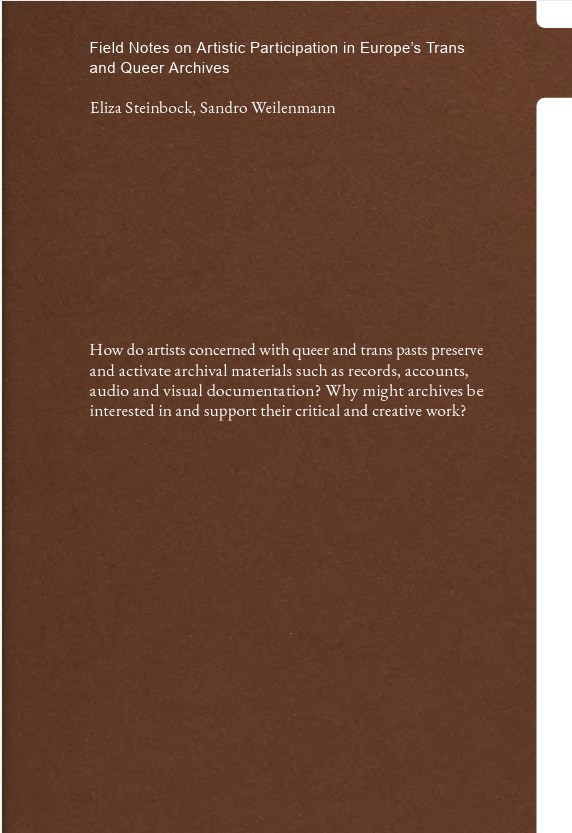
Eliza Steinbock/Sandro Weilenmann: Artistic Participation in Europe’s Trans and Queer Archives. PERCOL (Perverse Collections) 2025; open access download here
All images are from the book under review
Artistic Engagements with Queer Archives
Eliza Steinbock and Sandro Weilenmann, in Field Notes on Artistic Participation in Europe’s Trans and Queer Archives, explore the potential of artistic projects that focus on queer archival material. A hands-on look at artistic engagements with LGBTIQ* pasts.
A review by Emma Stich
Written in the context of the research project ‘Perverse Collections: Building Europe’s Queer and Trans Archives’ (PERCOL), which examines historical and contemporary developments in LGBTIQ* archives, the book focuses on the potential roles artists can take on within queer and trans archives. The book is based on 15 interviews as well as observations made by the authors during visits to various queer archives across Europe. At the heart of the research interest is the question of how both artists and archives can benefit from collaboration, and what difficulties can arise in the process of realising a joint project.
The Significance of Queer Archives
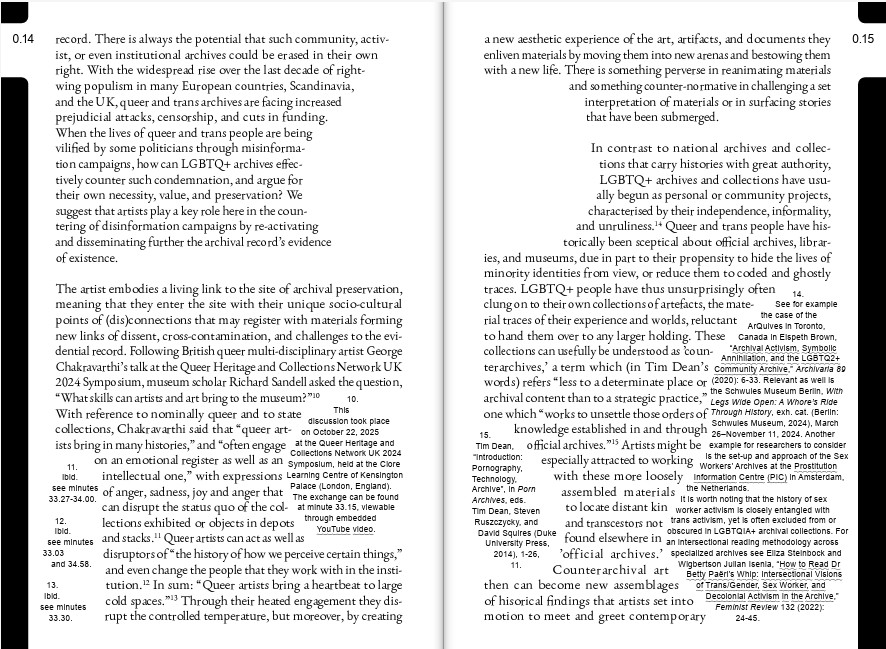
With the growing rise of right-wing populist hostility toward queerness in Europe, queer cultural institutions are also threatened by the resulting consequences, such as bias and budget cuts. Steinbock and Weilenmann argue in their book that artists can help address this problem and strengthen the social significance of queer archives. The authors see in the accessibility of queer archival material, and in the affective potential of artistic projects, a way to improve the social standing of queer archives and cultural organisations.
In their book, Steinbock and Weilenmann illustrate past artistic works that represent successful collaborations between artists and queer archives. However, they also draw on past experiences to show how such projects can fail, and have indeed failed before. The authors identify communication in particular as a possible source of problems.
Artistic Vocabulary
Because artists and archives often do not share the same vocabulary, exchanging ideas about a project’s plans and possible ways of implementing it can become a stumbling block. Further difficulties arise from the often limited accessibility of queer archives and their lack of resources, which frequently means that the scope for artistic collaboration is small.
To help overcome these and other challenges, the authors also offer advice for future projects. For instance, they address the question of how artists can get involved in LGBTIQ* archives (including on a voluntary basis), help expand them, and build new archives. The aim of such engagement is to create added value for both parties, drawing on their respective specialist knowledge and the insights gathered during research. The book also offers artists tips on how to achieve the most open and successful communication possible with archives.
Working with Archival Material
So how should artists approach archival material? What needs to be taken into consideration, and what might an agreement with archivists look like? Across roughly 100 pages, Eliza Steinbock and Sandro Weilenmann attempt to answer key questions on respectful engagement between artists and archives. The book offers particular value for artists seeking collaboration with queer cultural organisations, as well as for people working at such institutions, providing a valuable collection of past experiences from which much can be drawn for future projects. In Field Notes on Artistic Participation in Europe’s Trans and Queer Archives, the authors offer an accessible and concise insight into artistic and archival fields, for anyone interested in the work being done at the intersection of art and LGBTIQ* archives.
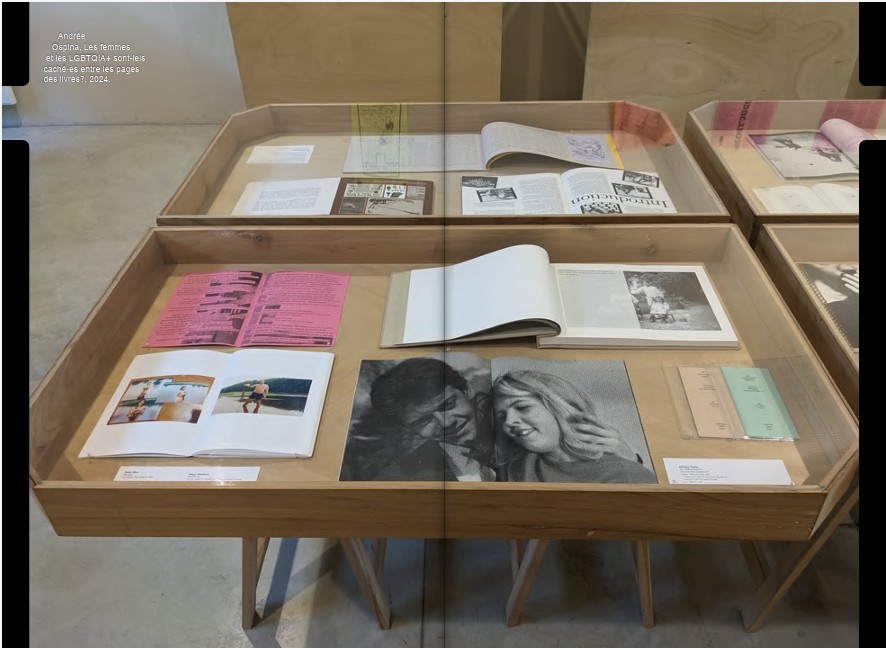
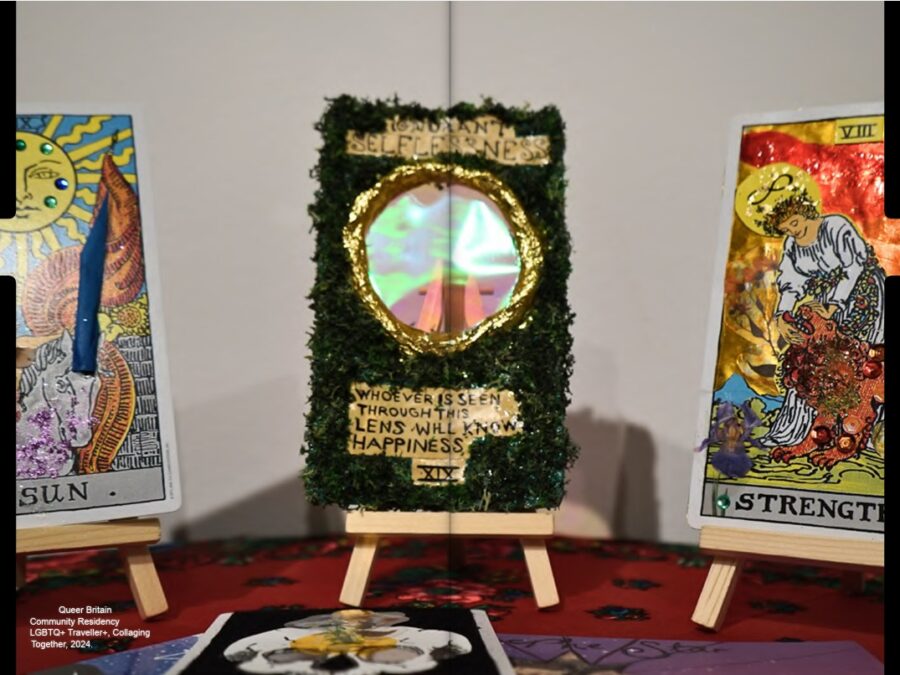
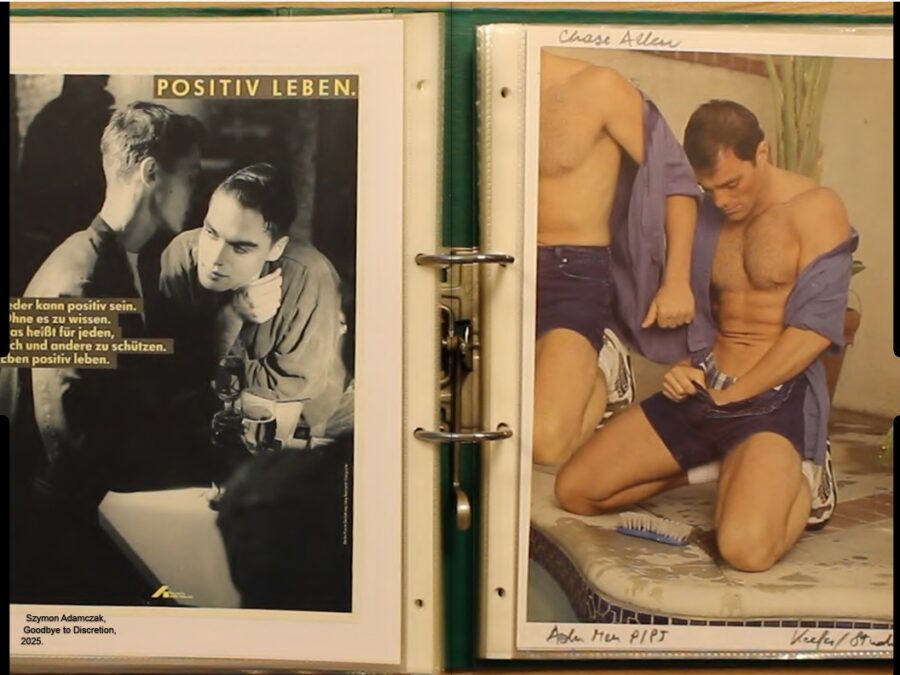
The publication is not only visually appealing but also richly illustrated, making the various artistic practices it discusses easy to follow. Among the wide range of projects presented is also that of Guilherme Maggessi and Rafał Morusiewicz on the estate of activist and artist Wolfgang Reder, which is held at Qwien.