


A Historic Safe Space for Trans People
The books Casa Susanna – The Story of the First Trans Network in the United States, 1959–1968 and To Survive on This Shore are valuable contributions to the field of transgender studies.
A review by Tara Prochaska
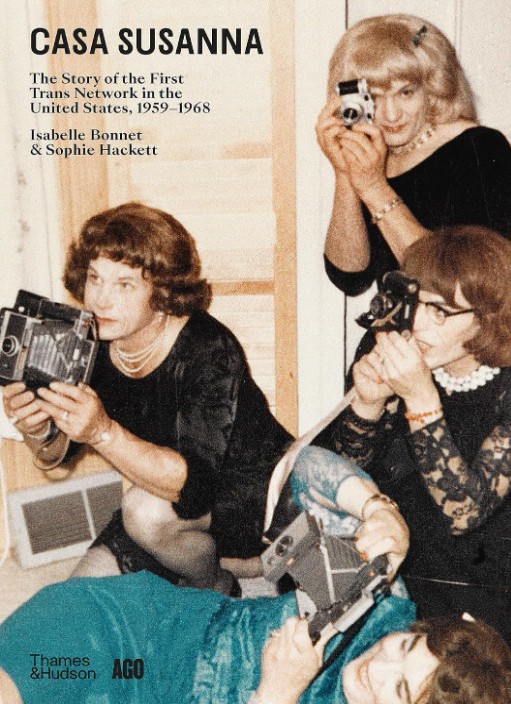
Isabelle Bonnet, Sophie Hackett: Casa Susanna. The Story of the First Trans Network in the United States 1959–1968. London/New York: Thames & Hudson 2024. Available at Löwenherz
In the late 1950s, the South American crossdresser Susanna Valenti, together with her wife, opened the doors of their property in New York as a safe space where guests could experiment with their gender identity through crossdressing and shared activities. Casa Susanna became a weekend gathering place for people who wanted to live as women in safety and community. Removed from mainstream society and its predominantly conservative and discriminatory views on gender roles and sexuality at the time, Casa Susanna became the first trans network in the United States.
Numerous photographs of Casa Susanna’s guests offer glimpses into a world full of queer joy beyond binaries. The book also includes several covers and articles from the magazine Transvestia, for which Susanna Valenti also wrote a column, “Susanna Says.” The magazine’s content — ranging from autobiographical essays and self-portraits to advice columns on topics like clothing and makeup — sheds light on a lively network of “transvestites.” Transvestia can be understood as a pre-internet social network in which people who broke with gender categories supported and exchanged with one another. In a piece marking the magazine’s hundredth issue, Susanna Valenti described the publication as something that “put colour, and light, and hope where there was nothing but drabness, fear, and despair before.”
Biographies of Older Trans* People
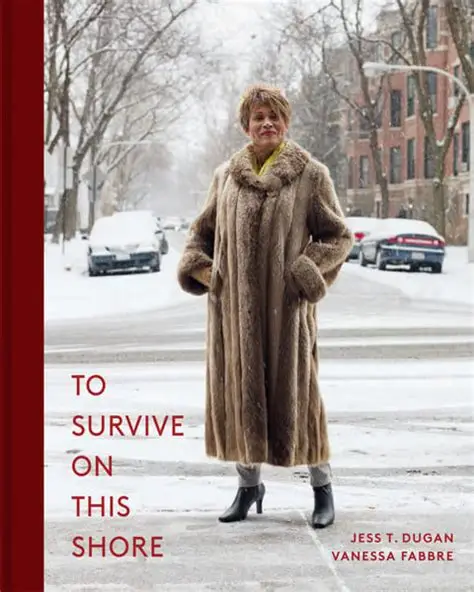
To Survive on This Shore engages with the life stories of older transgender people. Through interviews and portraits, the authors bring attention to this often underrepresented group, focusing on their experiences with gender identity. The people interviewed speak about topics such as their first encounters with their own sexuality and identity, relationships, family, religion, and inner struggles. Through glimpses into a wide range of lived realities, the authors show just how multifaceted and diverse transgender experiences can be.
Both publications center on the vivid, compelling history of trans people, communities, and activism. They shed light on various aspects of identity formation and the inner and outer conflicts trans people face. Both books also make clear the importance of community and a sense of belonging.